Heel pain can be frustrating, especially when it keeps showing up with your first steps in the morning, after sitting, or during running, walking, and standing at work. Plantar fasciitis is one of the most common causes of pain on the bottom of the heel, and it can affect runners, active adults, and people who spend long hours on their feet. Common risk factors include prolonged standing, limited ankle mobility, poor footwear, excessive pronation, obesity, and sudden increases in running volume.
At Shaw Spine & Sport, we often start with conservative care for plantar fasciitis, because most cases improve without surgery. Treatment may include activity modification, rehab, soft tissue care, footwear changes, and a plan to reduce overload on the irritated tissue. But when plantar fasciitis becomes stubborn or keeps returning, shockwave therapy may be the right next step. Research and clinical use both support it as a non-invasive option for chronic soft tissue conditions, and our clinic uses it specifically for cases that have not responded well to other treatments.
What Is Shockwave Therapy?
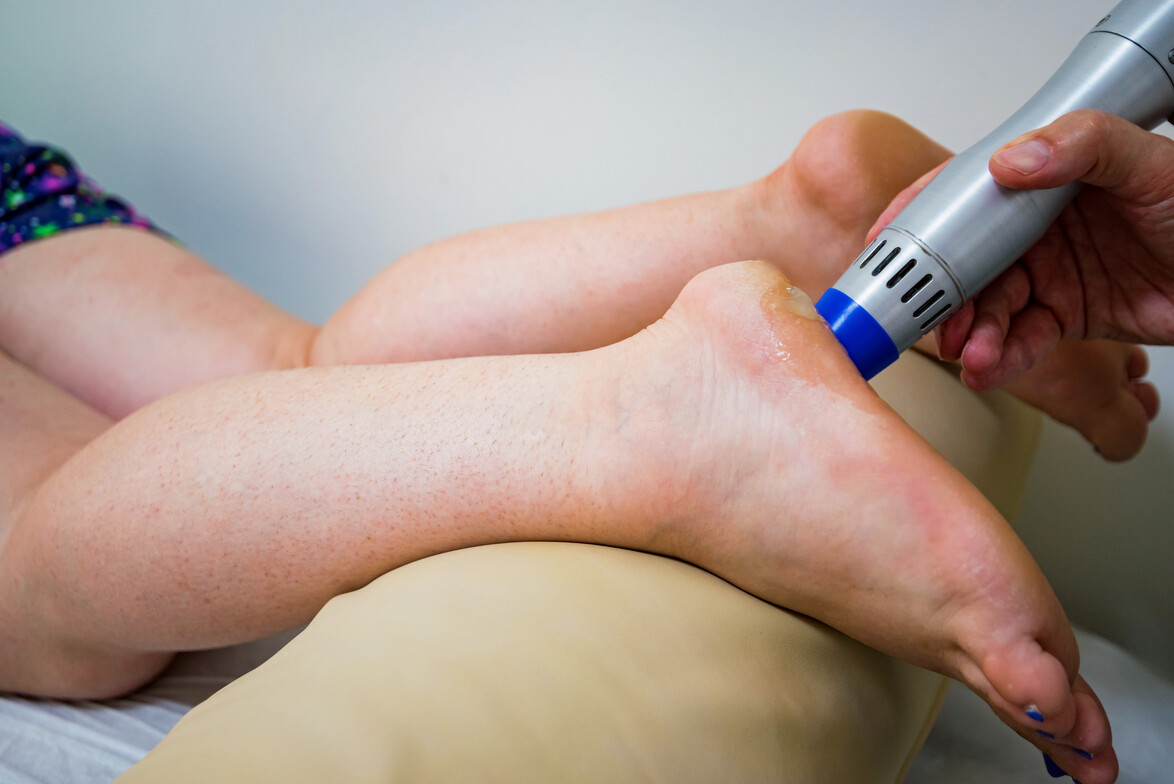
Shockwave therapy, also called extracorporeal shockwave therapy or ESWT, uses high-energy acoustic waves to stimulate healing in injured tissues. At Shaw Spine & Sport, we use shockwave therapy to help patients with chronic soft tissue injuries by increasing blood flow, promoting tissue repair, and encouraging healthier movement without surgery, injections, or downtime.
Why Plantar Fasciitis Can Be So Hard to Get Rid Of
Plantar fasciitis is not always a simple “rest it and it goes away” problem. In many cases, the tissue at the heel has been irritated for weeks or months. The result is ongoing pain, reduced tolerance for walking or exercise, and repeated flare-ups when activity increases too quickly. That is why a treatment plan needs to do more than just calm symptoms down for a few days. It should support healing while also addressing the mechanics that may be contributing to the problem.
When Shockwave Therapy Makes Sense for Plantar Fasciitis
Shockwave therapy often makes the most sense when plantar fasciitis has become persistent and conservative care alone has not been enough.
In practical terms, shockwave therapy may be worth considering when:
- You have ongoing heel pain that has not improved enough with rest, stretching, rehab, or shoe changes
- Your pain keeps returning when you try to resume running, workouts, or time on your feet
- You want a non-surgical, non-injection treatment option
- You are dealing with chronic plantar fasciitis rather than a brand-new flare-up
- You want to combine a regenerative treatment approach with rehab and movement correction
That combination matters. At Shaw Spine & Sport, shockwave therapy is often not a stand-alone treatment. We frequently combine it with chiropractic care, soft tissue treatment, and active rehab to improve long-term results and help patients move better, not just feel better temporarily.
What to Expect From Shockwave Therapy at Shaw Spine & Sport
Our process starts with an assessment. We identify the exact location of pain, look at whether shockwave therapy is appropriate, and consider the bigger picture behind your plantar fasciitis. During treatment, a handheld device applies acoustic pulses to the irritated area. Some discomfort is normal, but most patients tolerate treatment well. Afterward, mild soreness can happen, similar to how you might feel after a workout, and most people return to normal activity the same day.
Most patients need a series of visits rather than a single session. Improvement is commonly seen over 3 to 6 sessions spaced about a week apart, depending on the condition and severity.
Is Shockwave Therapy Right for Every Case of Plantar Fasciitis?
Not always. Some people improve well with basic conservative care and never need it. But if your plantar fasciitis is lingering, limiting your activity, or not responding the way it should, shockwave therapy may be a smart next step. It is especially appealing for people who want to avoid more invasive options and want a treatment that supports healing rather than only masking pain.
Get Help for Plantar Fasciitis in Clive and the Des Moines Area
If you are dealing with plantar fasciitis in Clive, West Des Moines, Waukee, Urbandale, Johnston, Grimes, or the greater Des Moines area, our team at Shaw Spine & Sport can help determine whether shockwave therapy makes sense for your case. We will evaluate your symptoms, movement, and contributing factors, then build a plan that fits your goals.
If heel pain has been hanging around longer than it should, shockwave therapy may be the next step that helps you finally move forward.
Ready to Find Out if Shockwave Therapy Is a Good Fit?
Schedule an appointment with Shaw Spine & Sport to get evaluated for plantar fasciitis and learn whether shockwave therapy should be part of your treatment plan.
.jpg)