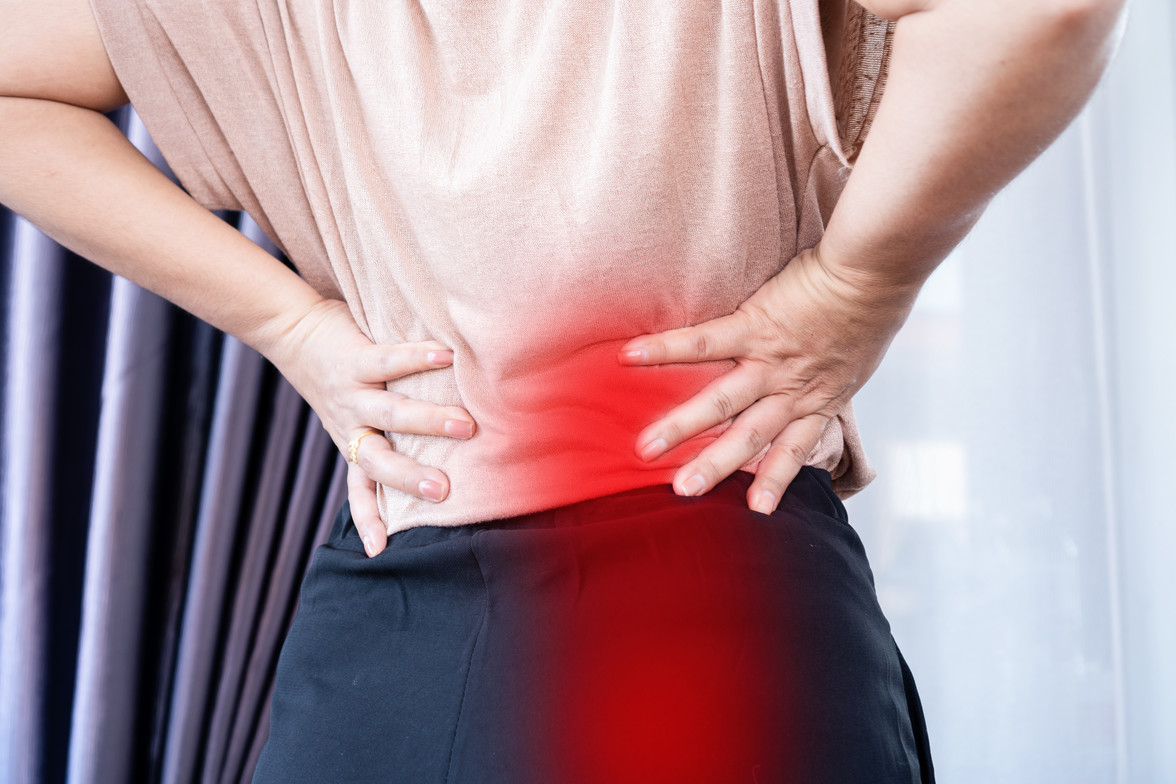
If you’ve been struggling with back pain or sciatica, you know how frustrating it can be to find lasting relief. The key isn’t more medication, injections, or surgery — it’s identifying the true cause of your pain so you can treat it effectively.
At Shaw Spine & Sport, we specialize in helping people get out of pain and back to doing what they love — without relying on pills or procedures. Below, we’ve outlined the three most common causes of back pain and sciatica, how to tell which one might be affecting you, and what’s really happening inside your body.
1. Herniated Disc
A herniated disc is one of the most recognizable sources of sharp lower back pain — often felt just above the tailbone and sometimes radiating into the buttocks or groin.
If your pain, tingling, or numbness travels down one leg in a clear, traceable line, there’s a good chance a herniated disc is involved. This happens when the soft disc between your vertebrae bulges and irritates or compresses the nerve that runs down the back of your leg — leading to what most people call sciatica.
Common signs of a herniated disc:
- Sharp or shooting pain down the leg
- Numbness or tingling along a specific path
- Pain aggravated by bending or lifting
- Often affects younger or active adults (especially after lifting, twisting, or car accidents)
2. Arthritis, Stenosis, or Degenerative Disc Disease
If you’re over 50 and your back or leg pain worsens when standing or walking — but improves when sitting — you may be dealing with spinal arthritis, stenosis, or degenerative disc disease (DDD).
These conditions are extremely common: about 95% of people over 50 show at least one of them on imaging. However, common doesn’t mean permanent. There’s a lot that can be done conservatively to help.
As we age, the discs between our vertebrae naturally shrink, reducing the space where nerves exit the spine. That’s why you often see people leaning forward on a shopping cart — it temporarily opens that space and eases pressure.
Typical signs include:
- Aching, generalized back or leg pain
- Pain that improves when sitting down
- Stiffness, especially in the morning
- Numbness or tingling in both legs
These patients often say things like, “I just need to sit for a minute — then it goes away.”
3. Piriformis Syndrome (Hip Rotators)
While sciatica is often linked to the spine, Piriformis Syndrome originates in the hip and gluteal muscles, not the lower back. The piriformis is a small but powerful muscle that helps rotate your hip and stabilize your pelvis. When it becomes tight, inflamed, or overworked, it can compress the sciatic nerve that runs directly underneath (and in some people, through) it — creating sciatica-like symptoms.
Unlike disc or joint-related causes, this condition is muscular, which means it can often be resolved with targeted movement, soft tissue therapy, and corrective exercise rather than invasive procedures.
Common signs of piriformis syndrome:
- Deep ache or tightness in the buttock (often on one side)
- Pain or tingling that radiates down the leg, but not always below the knee
- Pain worsens after sitting, driving, or running
- Discomfort crossing one leg over the other
- Pain relief when standing or moving around
Piriformis Syndrome is particularly common in runners, athletes, and those who sit for long periods — such as desk workers or drivers. Addressing the muscle imbalance, mobility restriction, and nerve irritation can lead to rapid improvement once properly identified.
Finding Lasting Relief Without Surgery
If you’ve been dealing with back pain or sciatica that keeps coming back, the best next step is identifying the exact cause— not just masking symptoms. Our specialists at Shaw Spine & Sport use a combination of movement testing, orthopedic assessment, and modern rehab to pinpoint what’s wrong and design a plan to fix it — naturally.
You don’t have to live with back pain or rely on injections or painkillers. Let’s get you back to moving, training, and living pain-free.
Schedule your appointment today to find out what’s really causing your pain and what it will take to fix it for good.
.jpg)