
When it comes to pain, breathing is probably not the first thing you think about. Most people focus on the painful area—low back, neck, shoulder, hip, or rib cage—not on how they breathe throughout the day.
But breathing patterns matter more than most people realize.
Diaphragmatic breathing, sometimes called belly breathing, does more than help you relax. It can influence muscle tension, stress response, spinal stability, posture, and the body’s ability to create healthy intra-abdominal pressure. These factors can all affect how you move, how you feel, and how well you recover from pain.
At Shaw Spine & Sport, we often look at breathing as part of the bigger picture. If someone has chronic pain, poor core control, recurring low back tension, or movement patterns that keep coming back, breathing is often one of the missing pieces.
What Is Diaphragmatic Breathing?
Diaphragmatic breathing is a breathing pattern that uses the diaphragm effectively instead of relying mostly on the chest, neck, and upper shoulders.
The diaphragm is a dome-shaped muscle beneath the lungs. When it works well, it descends during inhalation, allowing the abdomen to expand naturally. This is different from shallow chest breathing, where the shoulders lift, the chest dominates the breath, and the abdomen stays tight or pulled in.
A simple way to think about it:
- Chest breathing often creates tension.
- Diaphragmatic breathing helps create expansion, control, and support.
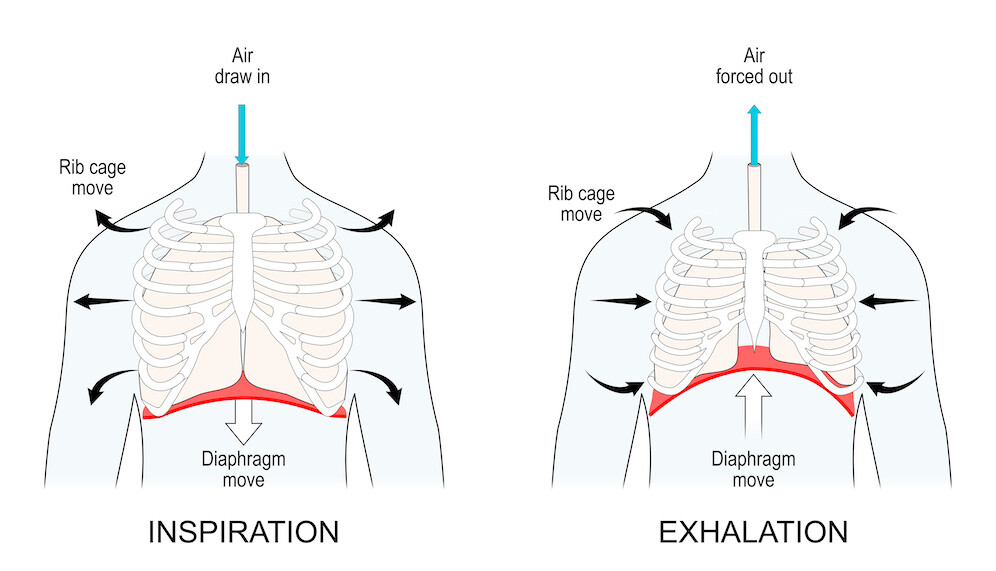
How Breathing Affects Chronic Pain
People in pain often brace without realizing it. They tighten their muscles, hold their breath, or take quick, shallow breaths. Over time, that can keep the nervous system in a more guarded, stressed state.
Several of the resources you shared highlight the same pattern: chronic pain often goes hand in hand with muscle guarding, shallow breathing, anxiety, and overactivation of the body’s stress response. Diaphragmatic breathing can help reverse some of that by reducing tension, slowing breathing rate, and helping the body shift away from a constant fight-or-flight pattern.
That matters because chronic pain is not just about tissue irritation. It is also influenced by the nervous system, stress, sleep, posture, movement habits, and muscle tone.
When breathing improves, patients often notice:
- less muscle tension
- better body awareness
- easier relaxation
- improved movement quality
- less guarding around painful areas
That does not mean breathing exercises cure chronic pain by themselves. It means they can be an important part of a treatment plan that helps calm the system and improve function.
Why Intra-Abdominal Pressure Matters
One of the biggest reasons diaphragmatic breathing matters is its role in creating intra-abdominal pressure.
Intra-abdominal pressure is the pressure created inside the abdominal cavity when the diaphragm, deep core muscles, and pelvic floor work together. In DNS and other movement-based rehabilitation models, this pressure acts like a natural stabilizing system for the spine and trunk.
Think of it like an internal support system.
When the diaphragm moves well and the trunk expands appropriately, the body can create better support for the lumbar spine, pelvis, and rib cage. That support can improve posture, reduce unnecessary strain, and help the body transfer force more efficiently during movement, exercise, lifting, and daily activity.
This is one reason breathing is not just about relaxation. It is also about stability.
The Connection Between the Diaphragm, Core, and Spine
The diaphragm is not only a breathing muscle. It is also part of your deep stabilization system.
When breathing mechanics are working well, the diaphragm coordinates with the abdominal wall, pelvic floor, and deep spinal stabilizers to help control pressure and support movement. DNS-based rehab often refers to this as a stabilizing cylinder for the spine.
When that system is not working well, people often compensate by:
- gripping their abs
- flaring their ribs
- holding their breath
- overusing the neck and shoulders
- arching the low back excessively
These patterns can contribute to poor core control, lower back discomfort, neck and shoulder tension, and recurring movement problems.
In other words, many people are trying to create stability the wrong way.
Instead of using coordinated pressure and muscular balance, they create stiffness and tension. That may feel like control in the short term, but it often leads to irritation over time.
Chest Breathing vs. Diaphragmatic Breathing
A lot of people with pain are chest breathers without knowing it.
With chest breathing:
- the chest rises first
- the shoulders may elevate
- the abdomen stays rigid or sucked in
- the neck and upper traps often work too hard
With diaphragmatic breathing:
- the lower rib cage and abdomen expand more naturally
- the diaphragm has room to descend
- the trunk can create better pressure and support
- the body often feels less tense and more grounded
One of the sources you shared makes an important point: sucking in the belly may actually reduce the abdominal stability the spine needs. Healthy breathing requires expansion, not constant bracing.
Why This Matters for Low Back Pain and Movement
For many people, poor breathing mechanics show up most clearly in the low back.
If you cannot create and manage intra-abdominal pressure well, the body often borrows stability from somewhere else. That can mean overusing the low back, gripping the ribs, tightening the hip flexors, or stiffening the neck and shoulders.
This is one reason diaphragmatic breathing can be helpful in rehab and performance settings. Better breathing can improve the base the body works from. And when the base is better, movement often improves too.
Better proximal stability supports better distal mobility. That means when the trunk is more stable, the shoulders, hips, and limbs can move more efficiently.
How to Practice Diaphragmatic Breathing
Here is a simple starting point:
- Lie on your back with your knees bent in a comfortable position.
- Place one hand on your chest and one on your abdomen.
- Inhale slowly through your nose.
- Try to let your abdomen and lower rib cage expand while keeping the upper chest relatively quiet.
- Exhale slowly through your mouth or pursed lips.
- Repeat for 2-3 minutes.
The goal is not to force a huge breath. The goal is to feel a more natural, controlled expansion through the lower trunk rather than lifting through the chest and shoulders.
Common Mistakes
When people first work on diaphragmatic breathing, they often:
- suck the stomach in while inhaling
- arch the low back to fake expansion
- shrug the shoulders
- breathe too big or too fast
- hold tension in the neck or jaw
If that sounds familiar, that is common. Breathing patterns are often learned over years, especially in people with stress, pain, old injuries, or prolonged sitting.
When Breathing Work Should Be Part of Treatment
Breathing assessment is especially important when someone has:
- chronic low back pain
- recurring neck or shoulder tension
- poor core control
- rib flare or abdominal gripping
- pain that keeps returning despite treatment
- difficulty relaxing during movement or exercise
In those cases, improving breathing is not about doing something trendy. It is about restoring one of the body’s foundational systems for movement and stability.
Final Thoughts
Diaphragmatic breathing may seem simple, but it is foundational.
When the diaphragm works well, it can help reduce unnecessary tension, improve pressure management, support the spine, and influence how the body responds to chronic pain. It is not a magic fix, but it is often an overlooked piece of recovery and performance.
At Shaw Spine & Sport, we look at more than just the painful area. We look at how your body moves, stabilizes, and compensates. For many patients, breathing is a meaningful part of that conversation.
If you have chronic pain, recurring low back tension, or feel like your body is always bracing, evaluating your breathing pattern may be a smart place to start.

.jpg)